
Home / CardioVive
CardioVive™ · human heart organoids
Human heart tissue with structure and complexity.
Beating human heart tissue with chambers, immune and neural cells. The source of the real human data behind CytoHub.AI.
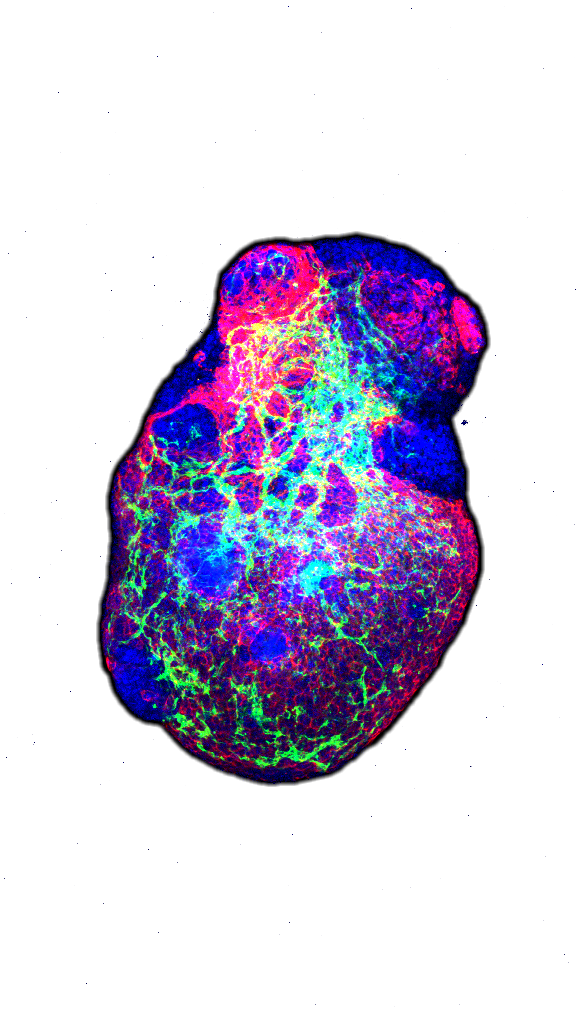
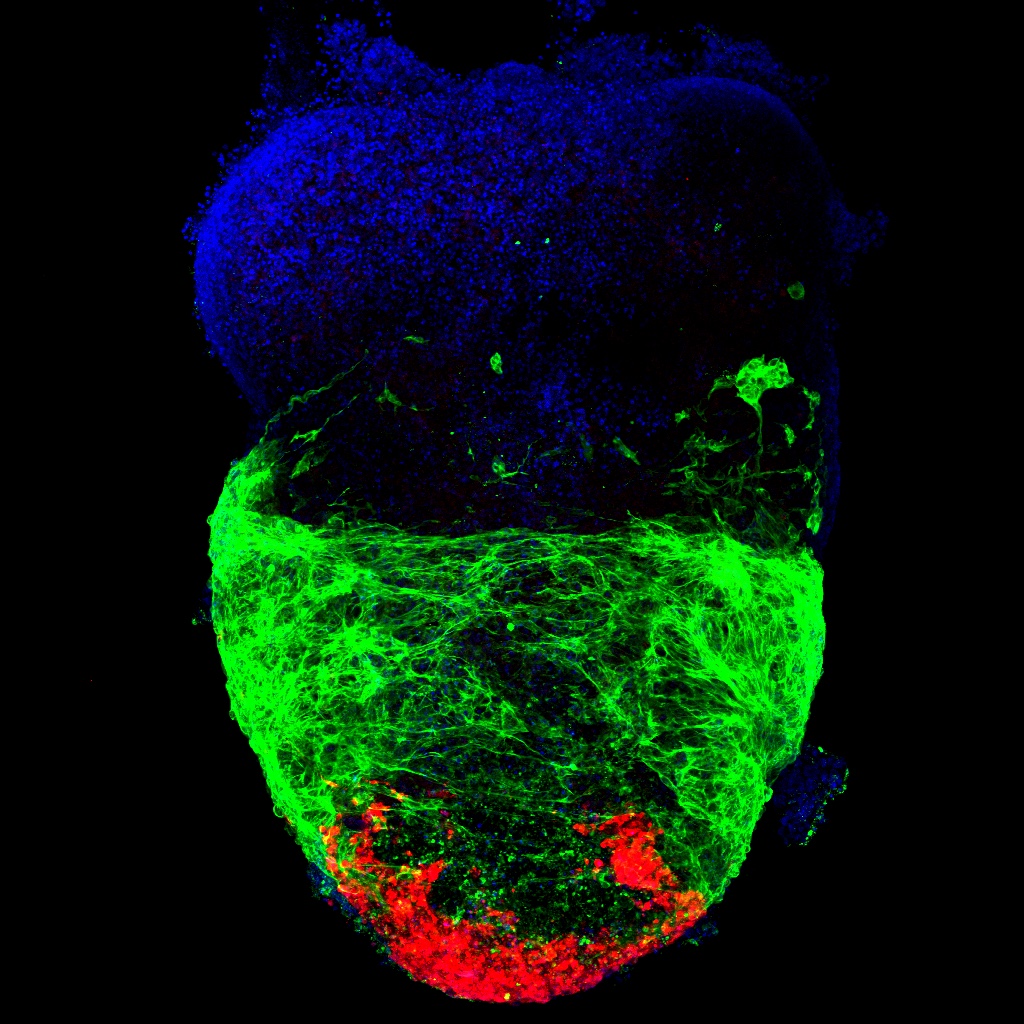
Built like a human heart
Real structure, not a flat layer of cells.
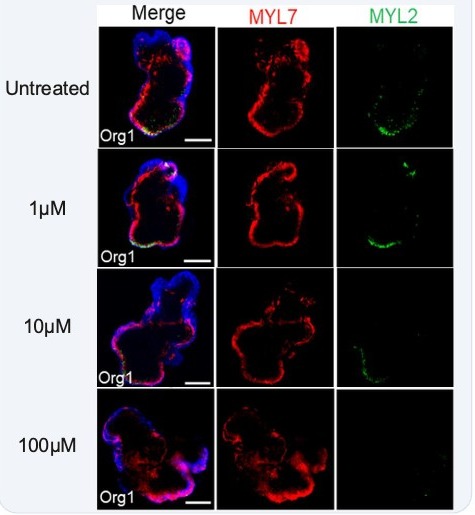
Each organoid self-organizes into chamber-like regions with the cell types of a developing human heart.
Lewis-Israeli et al. 2021 · Volmert et al. 2023 · O’Hern et al. 2025
Electrophysiology
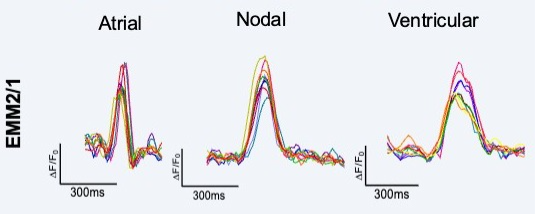
Read drugs chamber by chamber.
Atrial, nodal and ventricular regions each fire their own action potential, so a drug that hits one chamber shows up clearly.
Traces: Volmert et al., Nat Commun 2023. Paroxetine: Kostina et al., bioRxiv, under review.
Imaging
One organoid, read channel by channel.
Each fluorescent channel shows a different layer of the same tissue. Merged, they become one dataset for CytoHub.AI.
 01
Blue channel
The first layer of the tissue, imaged on its own.
 02
Green channel
A second stain, in the same organoid and the same frame.
 03
Red channel
A third stain, adding another layer of structure.
 04
Merged
All three together: one human heart tissue, captured as one dataset.
Fluorescence image of a human heart organoid, shown channel by channel.
One heart model. Every cardiac question pharma asks.
Cardiotoxicity
Flag cardiac liabilities before first-in-human dosing.
Arrhythmia
QT and AF signals from known drugs reproduced.
Immune-cardiac
Inflammation-driven atrial fibrillation, with resident macrophages.
Congenital defects
Developmental toxicity, such as ondansetron’s septal-defect signal.
Also measured: contraction (HFrEF). Next: relaxation (HFpEF).
Case study · ondansetron (Zofran)
The dish matches the clinic.
Ondansetron carries clinical warnings for QT prolongation and septal defects. In our founding lab’s published work, the tissue showed signals consistent with both.
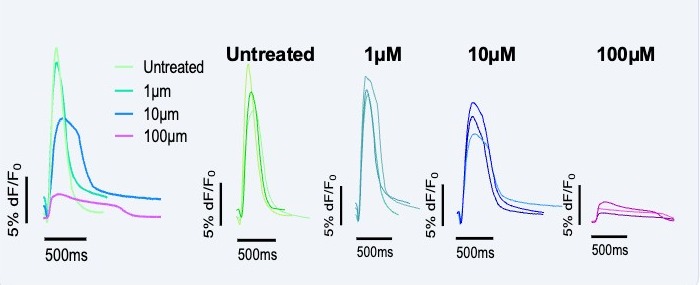
Volmert et al., Nat Commun 2023 · clinical context: Huybrechts 2018, Danielsson 2014
Immune-cardiac · a heart immunoid
Cardiac safety needs the immune system.
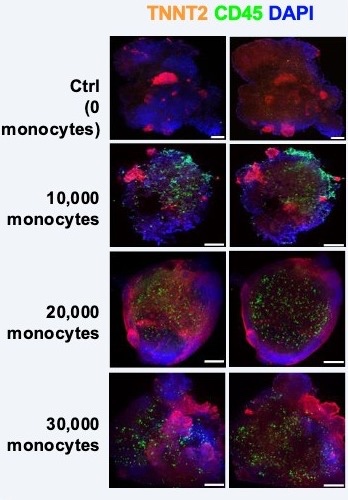
CardioVive is a heart immunoid: human heart tissue with its own immune cells, built to the design standards our founding lab proposed in Cell Stem Cell (2026).
- AutologousHeart and immune cells from one stem-cell line.
- IntegratedImmune cells settle throughout the tissue and stay.
- FunctionalInflammation triggers NLRP3-driven atrial arrhythmia.
- Development-matchedImmune cells arrive early; EMM2/1 matures the tissue.
Like all immunoids today, CardioVive is partly immune-competent; more immune cell types are next. It complements established safety studies.
O’Hern et al., Cell Stem Cell 2025 and 2026
Designed to cover all five.
Most models offer throughput or biology. CardioVive with CytoHub.AI is designed to deliver human structure, throughput, immune and neural cells, AI and proprietary data together.
| Approach | Human heart structure | Pharma throughput | Immune + neural | AI on its own data | Proprietary heart data |
|---|---|---|---|---|---|
| CytoHub · CardioVive + CytoHub.AI | |||||
| AI drug discovery platforms | |||||
| Multi-organ tissue platforms | |||||
| 2D cardiomyocyte monolayers | |||||
| Cardiac spheroids | |||||
| Organ-on-chip |
Swipe the table sideways to see all columns →
Blind validation
Catch the drugs pharma already lost.
Our next study tests drugs that failed in the clinic for cardiac safety, blinded and alongside safe controls. We will publish the score, hits and misses alike.